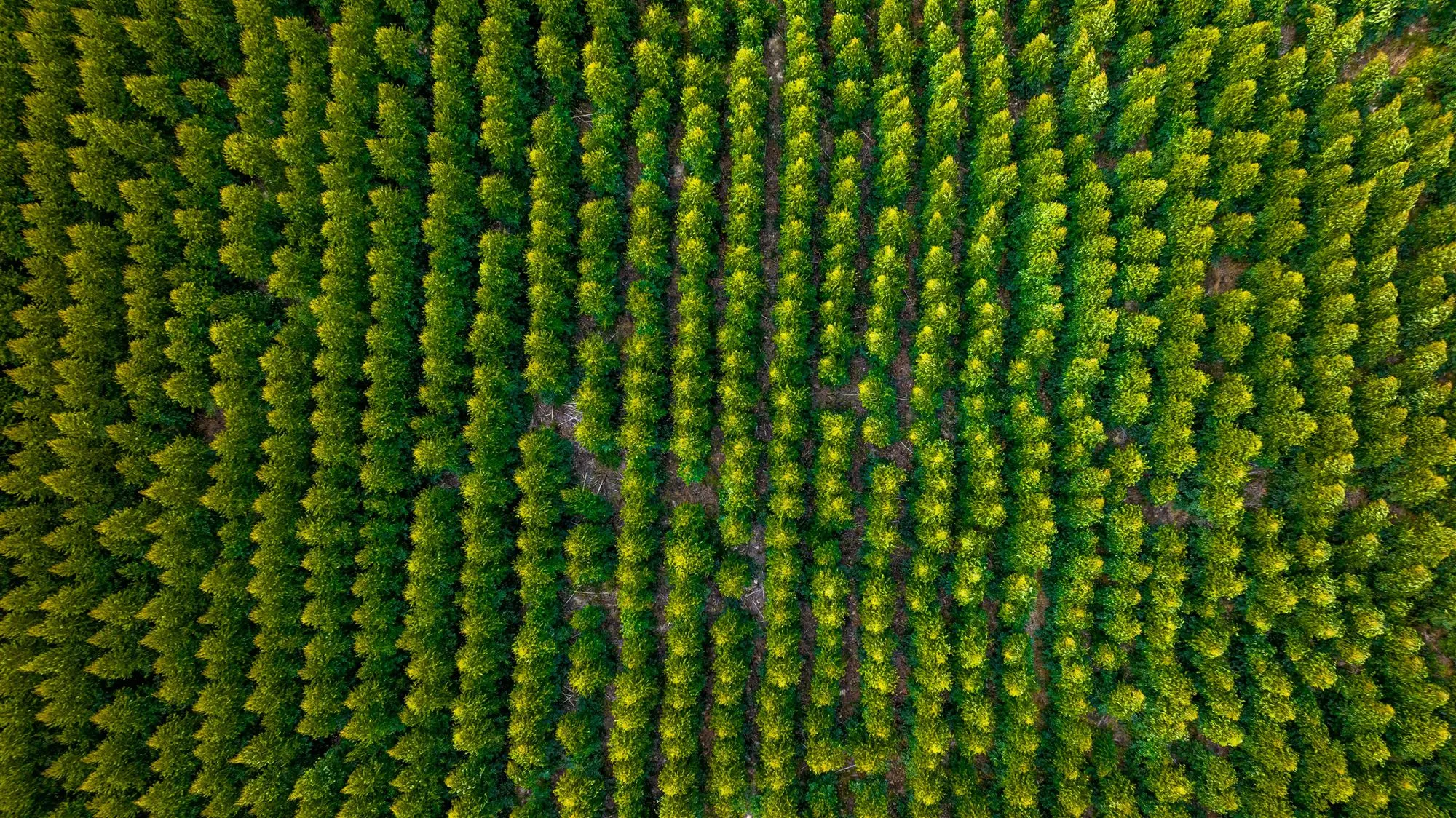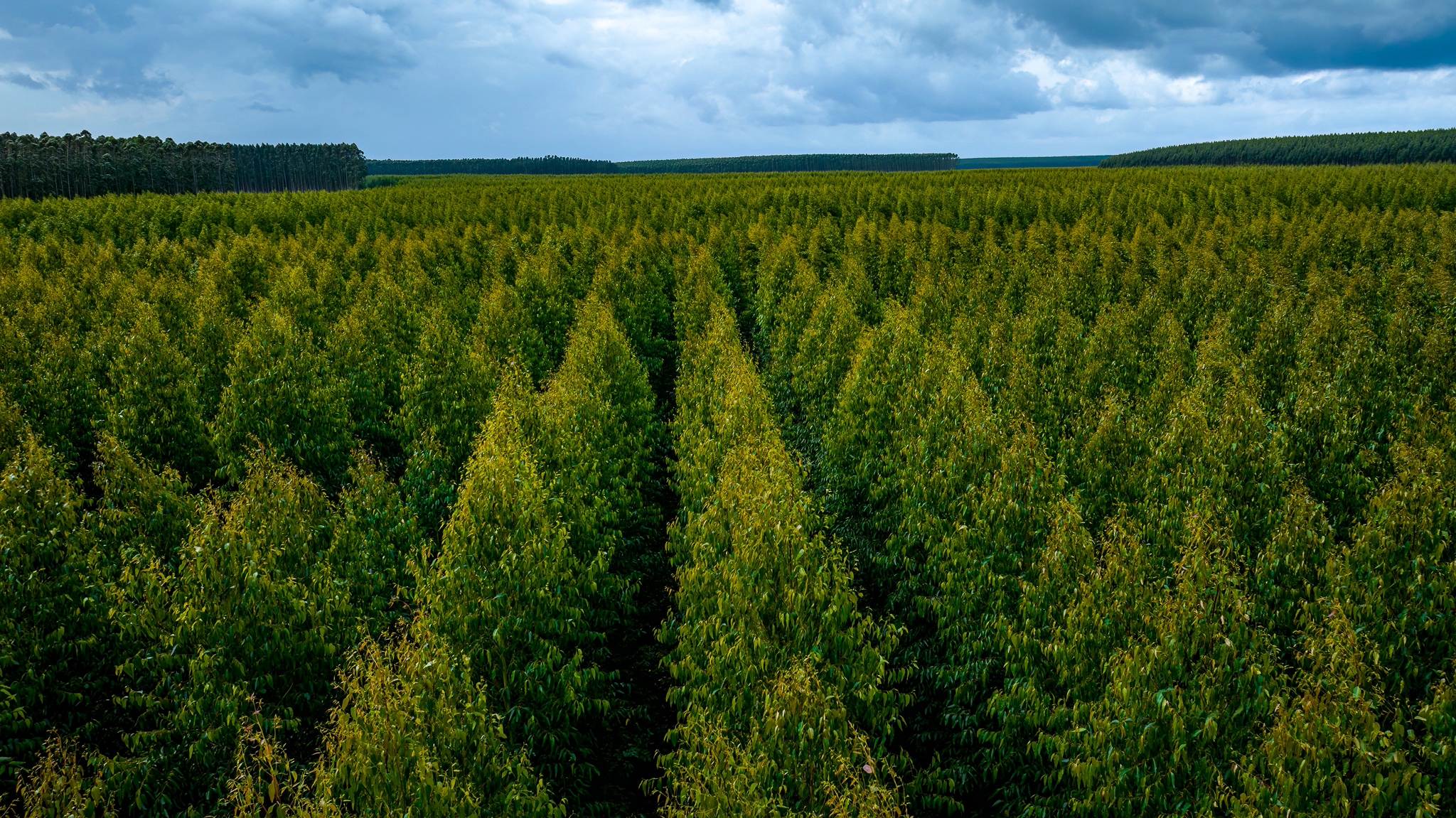
Wet tropics, East Sabah: Eucalyptus pellita
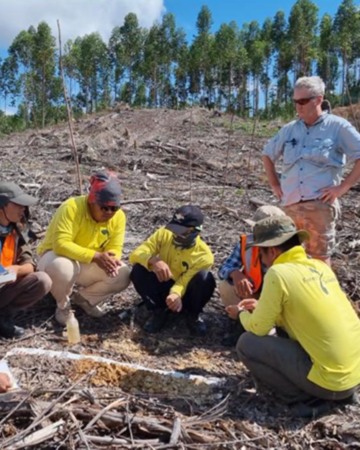
In a 12-month open-field trial in East Sabah, Malaysia, Forest3 Rootzone fertilization was compared with standard forestry fertilization practices during Eucalyptus pellita establishment under tropical field conditions.
Results showed higher nutrient use efficiency (NUE), tree height and survival rates, indicating improved early establishment performance.
Key conclusions
+5
%
Higher survival rate
At 12 months after transplanting, compared with standard forestry practices
Higher Nutrient Use Efficiency
Both nitrogen (N) and phosphorus (P) use efficiency improved compared with standard forestry fertilization practices. Nitrogen efficiency was 4 times higher, and phosphorus efficiency was 3 times higher.
Improved performance at 6 and 12 months
Tree height and survival rates were higher than with standard forestry fertilization practices at both measurement points after transplanting.

+15
%
Greater tree height
At 12 months after transplanting, compared with standard forestry practices
Evaluating Forest3 Rootzone product performance during Eucalyptus pellita establishment.
Trial details
Eucalyptus
Fast-growing hardwood for pulp and timber.

Southeast Asia
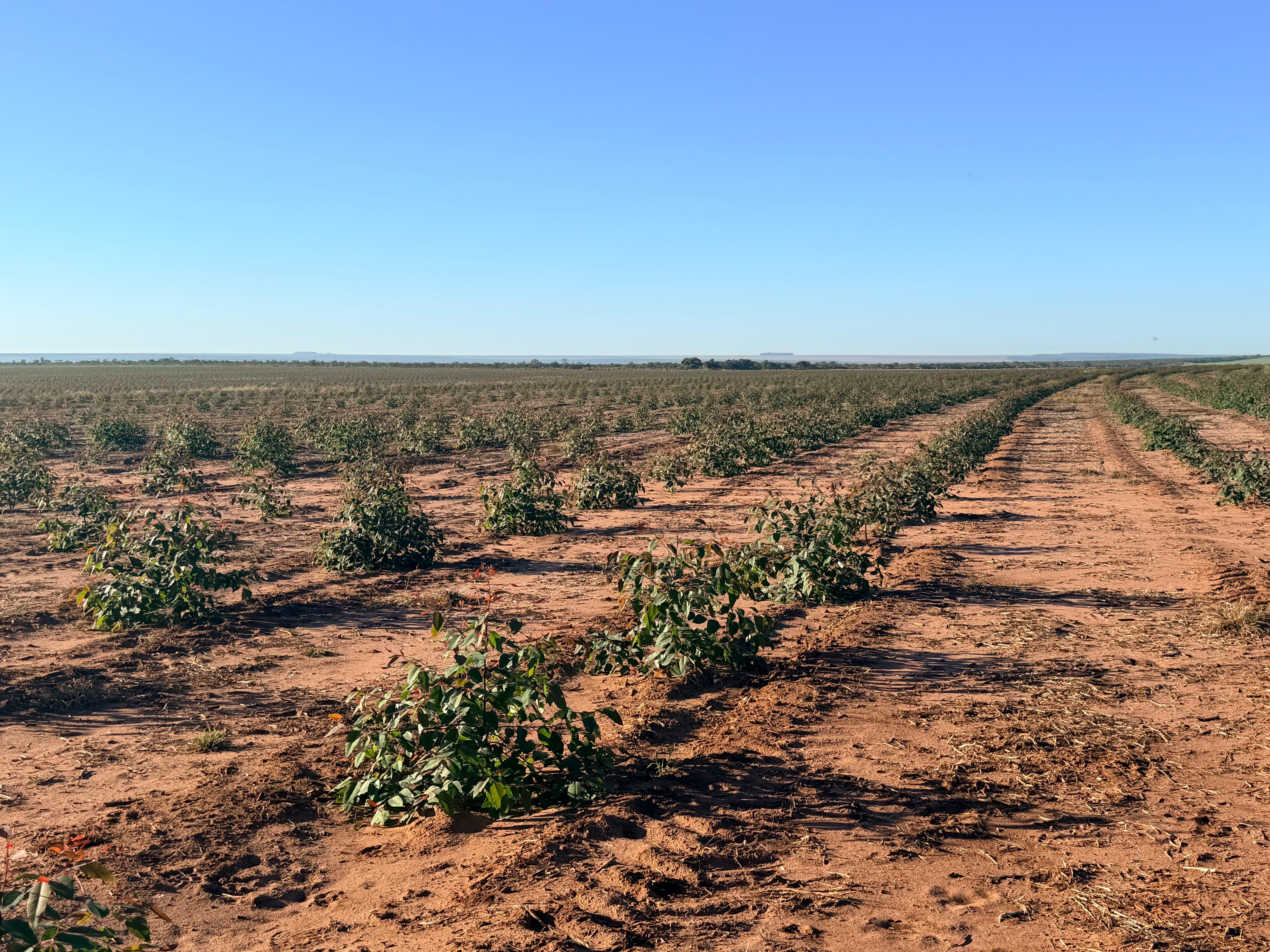
Establishment

Tropical
Field performance
The graphs compare results for the Forest3 Rootzone and standard forestry fertilization practices. Nutrient-use efficiency is expressed as tree height gain (cm) compared to control divided by the amount of nitrogen or phosphorus applied (kg/ha), assessed at 9 months after transplanting. Tree height and survival rates were measured at 6 and 12 months after transplanting.
Greater height gain per nutrient applied
At 9 months after transplanting, trees treated with Forest3 Rootzone showed a +40 cm height gain per kg/ha of nitrogen (N) applied and a +27 cm height gain per kg/ha of phosphorus (P) applied compared with standard forestry fertilization practices.
These results correspond to a 4 times more efficient absorption of nitrogen and a 3 times better use of phosphorus compared with standard forestry fertilization practices.
Currently growing...
Currently growing...
Currently growing...

Currently growing...
Nutrient Use Efficiency of nitrogen (N) and phosphorus (P) at 9 months after transplanting
Taller trees after transplanting
Compared with standard fertilization practices, trees treated with Forest3 Rootzone grew on average +53 cm taller (+22%) at 6 months after transplanting and 67 cm taller (+25%) at 12 months after transplanting.
Currently growing...
Currently growing...
Currently growing...
Currently growing...

Tree height (m) at 6 and 12 months after transplanting.
More trees surviving establishment
At 6 months after transplanting, the survival rate of Forest3 Rootzone-treated trees was +3% higher than with the standard forestry fertilization practices and +8% higher than that of the Untreated group.
This advantage persisted at 12 months after transplanting, when survival rates in Forest3 Rootzone-treated trees were +5% higher than in the standard forestry fertilization practices and +17% higher than in the Untreated group.
Currently growing...
Currently growing...
Currently growing...
Currently growing...

Tree survival (%) at 6 and 12 months after transplanting
“Forest3 Rootzone has performed favourably to contemporary fertilization techniques and has the advantage of ease of delivery and application. The comparable results obtained with the Triferto fertilizers are despite having much lower macro-nutrient contents compared to standard fertilizers, suggest that their delivery mechanism is more efficient and there are fewer losses to leaching and volatilization.”
Dr. Colin Smith
Independent Forestry & Silviculture Advisor
Partner Review