How our Advisory Board reviews a new trial

Written by:

Dr. Colin Smith

Before a trial goes into the ground, an independent board of foresters and scientists checks its design. The questions they ask, and why they sometimes send it back.
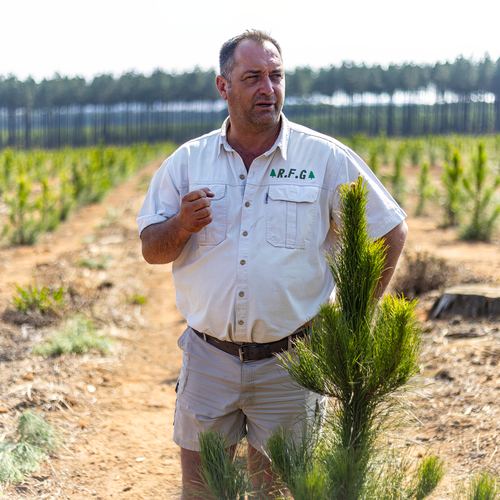
Grower next to a young pine in a newly planted field

Research & innovation

Sustainable forestry

12/06/2026

The challenge

Where this started

Before a trial goes into the ground, an independent board of foresters and scientists checks its design. The questions they ask, and why they sometimes send it back.

Growers asked us the same question in different regions, so we set up a study that could answer it under real plantation conditions instead of in a greenhouse.

What we tested

Plot design and measurements

Each site had treated and untreated plots side by side, planted on the same day with the same clones. Our field team measured survival and height at fixed intervals and took soil and leaf samples along the way.

Aerial view of a plantation in rows

What it means for growers

The results are a starting point, not a recipe: soils, climates and species differ. Talk to our team about how the findings apply to your own sites, or join a trial through the Growth Optimization Program.

Relevant insights

Grow your knowledge

Field results, research and practical advice from the Forest3 team, to help you get more out of every plantation.

Why the first 90 days decide a plantation’s yield

The weeks after planting set the pace for the whole rotation. We look at what young trees need in their first 90 days, and how matching nutrient release to root growth cuts losses in the field.

The weeks after planting set the pace for the whole rotation. We look at what young trees need in their first 90 days, and how matching nutrient release to root growth cuts losses in the field.

Tree nutrition

Plantation performance

Sustainable forestry

14/10/2026

Controlled-release nutrition in eucalyptus nurseries

Nursery seedlings grow fast and use up soluble fertiliser just as fast. A controlled-release blend keeps nutrients available for the whole nursery cycle, with fewer top-ups and more even plugs.

Nursery seedlings grow fast and use up soluble fertiliser just as fast. A controlled-release blend keeps nutrients available for the whole nursery cycle, with fewer top-ups and more even plugs.

Tree nutrition

02/10/2026

What five years of pine trials taught us

Five seasons of side-by-side plots show where pine responds to nutrition at planting, and where it does not. A summary of the results and what we changed because of them.

Five seasons of side-by-side plots show where pine responds to nutrition at planting, and where it does not. A summary of the results and what we changed because of them.

Plantation performance

Research & innovation

18/09/2026

Less run-off on steep plantation slopes

On sloped sites, broadcast fertiliser washes away with the first heavy rain. Placing nutrients in the root zone keeps them where the tree can use them, and out of nearby streams.

On sloped sites, broadcast fertiliser washes away with the first heavy rain. Placing nutrients in the root zone keeps them where the tree can use them, and out of nearby streams.

Sustainable forestry

04/09/2026

Matching nutrient release to the growth curve

A young tree’s demand for nitrogen, phosphorus and potassium changes month by month. How release curves are designed to follow that demand instead of front-loading it.

A young tree’s demand for nitrogen, phosphorus and potassium changes month by month. How release curves are designed to follow that demand instead of front-loading it.

Tree nutrition

Research & innovation

21/08/2026

Inside the Growth Optimization Program

From the first soil sample to the final measurement: how a GOP trial runs, the checkpoints along the way and the data growers receive at each step.

From the first soil sample to the final measurement: how a GOP trial runs, the checkpoints along the way and the data growers receive at each step.

Plantation performance

07/08/2026